

By Ejike Ikezuagu – UK.
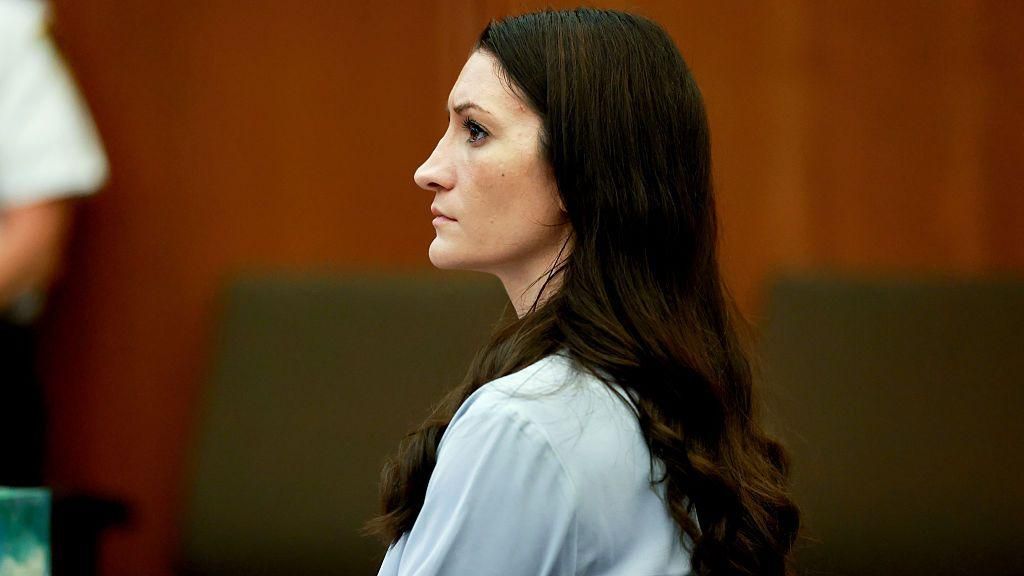
The five‑week murder trial of Lindsay Clancy in Massachusetts, USA, a case that gripped global attention ended in a dramatic deadlock. After seven days of intense jury deliberation, Judge William Sullivan declared a mistrial when jurors could not unanimously decide whether Clancy was criminally responsible for killing her three children or whether she acted under the devastating weight of postpartum psychosis, a severe mental health crisis that can distort reality and destroy judgment.
The mistrial did not acquit her and did not convict her, it simply exposed a painful truth, the law struggles to interpret human suffering, especially when mental illness blurs the line between intention and incapacity.
Clancy, a 36‑year‑old labour and delivery nurse, never denied killing her children, Cora (5), Dawson (3), and Callan (8 months). She attempted suicide immediately afterward, leaving herself permanently paralysed. Her defence argued that she was in the grip of postpartum psychosis, a rare but catastrophic mental disorder that can produce hallucinations, delusions, and a complete break from reality.
Experts testified that Clancy had been treated with multiple psychiatric medications, and her mental state had deteriorated rapidly. Her lawyers argued that she was not a criminal acting with malice, but a mentally sick woman whose mind had collapsed under chemical and hormonal pressure.
The prosecution disagreed, offering a different diagnosis and insisting she understood her actions. This clash of medical interpretations left jurors torn, not between guilt and innocence, but between law and compassion, between legal definitions and human vulnerability.
The jury’s deadlock was not simply indecision; it reflected society’s moral conflict. As one legal expert noted, the jury became “a proxy for the moral sense of the community.”
How do ordinary citizens judge a mother who loved her children, yet killed them while in a mental state she could not control?
The law demands clarity, a binary choice between criminal responsibility or insanity, but Clancy’s case existed in the grey zone where medical science and legal frameworks fail to align. Jurist’s analysis described it as a “systemic failure” of the legal model to process complex psychiatric pathology within rigid definitions of guilt.
One juror reportedly struggled with the court’s instructions on reasonable doubt, contributing to the deadlock. The judge could not force unanimity, and the legal system reached its limit.
Beyond the courtroom drama lies a deeper tragedy, a mother whose mind broke under postpartum psychosis, three innocent children whose lives were lost, family shattered, community divided, legal system unable to reconcile medical reality with legal expectations
Clancy now remains in a psychiatric hospital, facing lifelong paralysis, psychological trauma, and the unbearable grief of knowing what happened, a grief her lawyer described as “unbearable” and rooted in medical negligence that failed to protect her during her mental collapse.
The Clancy mistrial forces us to confront uncomfortable questions, can a mother in psychosis truly form criminal intent? Should the law treat mental illness as a mitigating factor or a full defence? How do societies balance justice for victims with compassion for the mentally ill? What happens when medical systems fail to detect or treat severe psychiatric crises?
This case is not only about America, but also a global reminder that mental health is not a private struggle, it is a public responsibility, when systems fail, tragedies follow.
For Nigeria, where mental health is often misunderstood or stigmatized, the Clancy case is a wake‑up call. It shows the danger of ignoring postpartum depression, bipolar disorder, and psychosis. It shows how untreated mental illness can escalate into unimaginable outcomes.
It also challenges our justice systems, Nigerian, American, and global to evolve beyond rigid binaries and embrace a deeper understanding of human vulnerability.
The mistrial in Lindsay Clancy’s case is not a failure of justice; it is a recognition that justice cannot be blind to suffering. The law must protect society, but it must also understand the human mind, especially when that mind is broken.
Clancy’s story is tragic, heart-breaking, and morally complex. It reminds us that justice is not only about punishment, but also about compassion, context, and the courage to see humanity even in moments of horror.
As the world watches what happens next, one truth remains, when mental illness and motherhood collide, the law alone is not enough. Society must respond with empathy, science, and support or risk repeating this tragedy.
Ejike Ikezuagu is a UK Officer, Publisher, and Public-Interest Journalist writes from the UK.